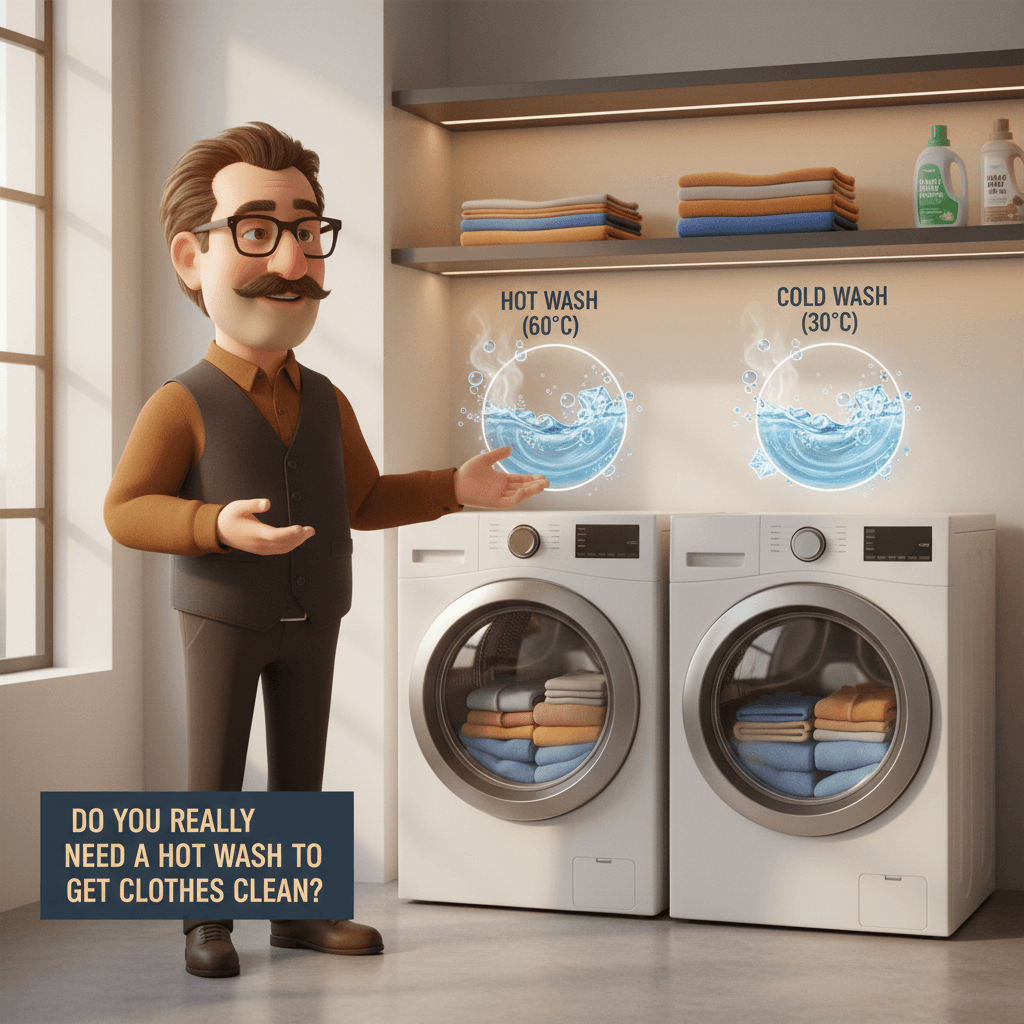
I can still remember the smell of my nan’s laundry day. The entire kitchen would fill with steam, the windows fogged up, and the scent of soap flakes and clean cotton was just… biblical. Central to this weekly ritual was her iron-clad belief, passed down to my mum and then to me: for a proper, hygienic clean, you absolutely had to wash at 60 degrees. Anything less was just, in her words, “giving the clothes a bit of a rinse.”
For years, I followed this advice religiously. Towels? 60°C. Bedding? 60°C. My favourite footie shirt after a particularly muddy Sunday league game? You guessed it. It just felt right, didn’t it? The heat felt like it was scorching the germs away, leaving everything pristine. But what if I told you that this golden rule of laundry, this bedrock of British household wisdom, is now mostly a myth?
Blimey. I know. Let’s put the kettle on and have a chat about it.
The Great Hot Wash Debate: A Generational Divide
The belief that “hotter is cleaner” is deeply ingrained in our national psyche. It’s the sort of advice that gets passed down like a family recipe for shepherd’s pie. You don’t question it; you just do it. And for a very long time, this advice was spot on.
But clinging to this idea today is a bit like insisting on using an old Nokia 3310. It was brilliant, indestructible, and perfect for its time, but technology has moved on. Your smartphone does a heck of a lot more, and it does it far more efficiently. The same is true for your washing machine and the detergent you pop inside it.
So why does the myth persist? Because for our parents' and grandparents' generations, it wasn’t a myth at all. It was a scientific fact based on the technology they had.
Back in the Day: When Your Nan Was Absolutely Right
Let's hop in the time machine and head back to the era of the twin-tub and the first automatic washing machines. In post-war Britain, hygiene was a top priority, and killing germs was serious business. Heat was the most reliable weapon in the domestic arsenal.
Here’s why a 60°C wash was non-negotiable back then:
- The Detergents Were Simple: Early laundry powders were essentially soap flakes. Just like when you’re washing a greasy roasting tin, you need hot water to cut through the grime and, crucially, to dissolve the soap itself. A cold wash would have left a sludgy, soapy residue on the clothes.
- The Machines Weren’t as Clever: Old machines relied on a simple agitator and a huge amount of water. The mechanical action—the physical bashing of the clothes—was pretty basic. The hot water had to do most of the heavy lifting when it came to cleaning.
- Heat Was the Only Germ Killer: Without the advanced chemical wizardry of modern detergents, high temperature was the only surefire way to kill bacteria and viruses. A 60°C “hygiene wash” for bedding, towels, and baby nappies was the gold standard for keeping the family healthy.
So, your nan wasn’t wrong. She was using the best available tech and knowledge for her time. But things have changed. Dramatically.
The Truth: Secret Science in Your Detergent Box
The single biggest revolution in laundry didn’t happen in the washing machine—it happened inside the detergent box. I’m talking about the introduction of enzymes.
Now, don't glaze over! This is the magic bit. Think of enzymes as a team of microscopic, stain-busting superheroes, each with a specific superpower:
- Protease: This one is a protein-muncher. It gobbles up stains like blood, sweat, grass, and egg.
- Amylase: The carb-crusader. It tackles starchy messes like gravy, pasta sauce, and potato.
- Lipase: The fat-fighter. This enzyme breaks down greasy, oily stains from things like butter, cooking oil, and lipstick.
These little wonders get to work and chemically dismantle stains, lifting them right out of the fabric. But here’s the crucial plot twist: they are designed to work best in cool temperatures, typically between 30°C and 40°C.
What happens when you crank the dial up to 60°C? You boil them alive! High temperatures “denature” the enzymes, destroying their structure and rendering them completely useless. You’re essentially turning off the primary cleaning power of your expensive biological detergent before it’s even had a chance to work.
Modern washing machines have also had a massive upgrade. They use far less water, creating a more concentrated cleaning solution. Their sophisticated drum patterns lift and drop clothes more effectively, providing a better mechanical clean. They work in perfect harmony with these new, cool-water detergents.
The result? A 30°C wash with a good biological detergent is now more effective at removing everyday stains than a 60°C wash was in your nan's day. Plus, according to the Energy Saving Trust, washing at 30°C uses around 40% less electricity than higher temperatures. You get cleaner clothes and a healthier bank balance. I’d say that’s a win-win.
The Verdict: Tod’s New Rules for Laundry
Alright, so we’ve established that for day-to-day washing, 30°C is your new best friend. It saves money, it’s kinder to your clothes (less shrinking and fading!), and it gets the job done brilliantly. But does that mean your 60°C button should start gathering dust? Not quite.
Heat is still the undisputed champion of thermal disinfection. You just need to deploy it strategically, not as your default setting. Here are my definitive, modern-day laundry rules:
1. Make 30°C Your Go-To Cycle: For the vast majority of your laundry—your t-shirts, jeans, jumpers, coloureds—a 30°C cycle with a quality biological detergent is absolutely perfect. It’s the smart, efficient, and effective choice for modern life.
2. Use 40°C for a Little Extra Oomph: For heavily soiled items, like muddy sports kits or stubborn greasy stains on whites, bumping it up to 40°C can give the enzymes a bit of a boost without destroying them entirely.
3. Reserve 60°C for ‘Code Red’ Hygiene Situations: The NHS still recommends a 60°C wash in a few specific scenarios where you need to obliterate germs: * After an Illness: When someone in the house has been ill (especially with a stomach bug), wash their bedding and towels at 60°C to kill off any lingering bacteria or viruses. * Contaminated Items: Things like reusable nappies or cloths used to clean up raw meat demand a proper sterilising wash. * Your Monthly ‘MOT’ Wash: This is the big one! Once a month, you must run an empty, hot wash (60°C or even 90°C) with a dedicated washing machine cleaner. This kills the mould and bacteria that build up in the pipes from constant low-temperature washing, preventing that nasty damp smell and keeping your machine itself hygienic.
By following these rules, you get the best of both worlds: energy-efficient daily cleaning and powerful sanitisation precisely when you need it.
So, next time you’re loading the machine, take a moment to thank your nan for her wisdom, and then confidently turn the dial to 30°C. She was right for her time, but now it’s our turn to embrace the new science of clean.
Feeling a bit lost in the sea of modern appliances? If your old washer is on its last legs and you’re baffled by all the new cycles and features, don’t you worry. Pop over to tod.ai for a quick chat, and I’ll help you find the perfect machine for your home, no fuss guaranteed. Sorted!